
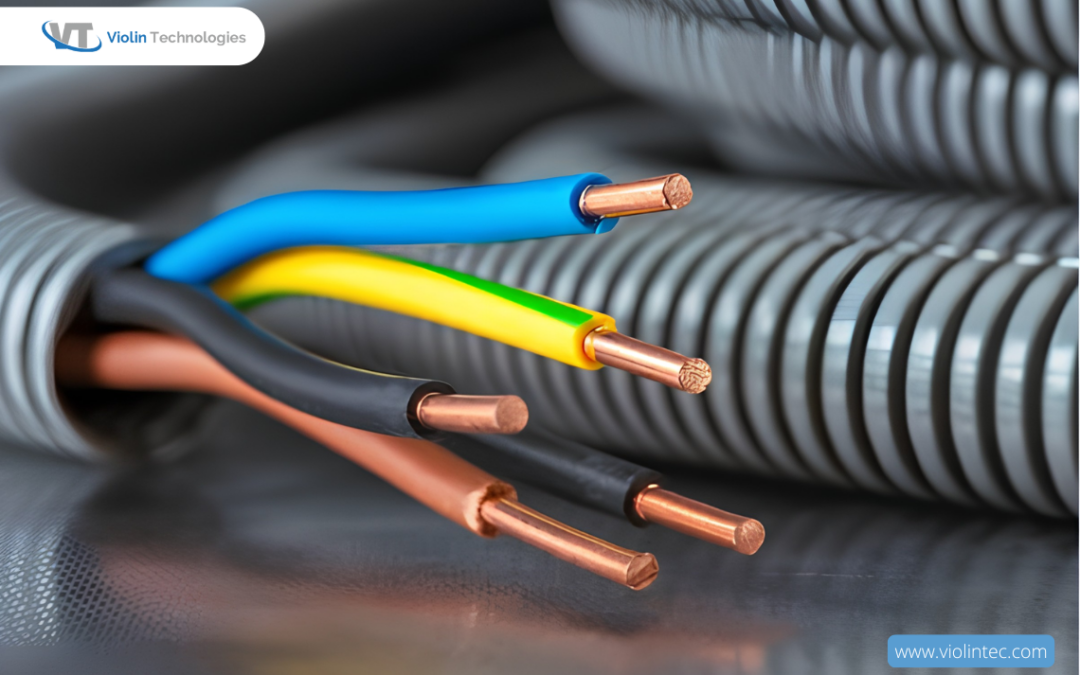
What Is Electrical Conduit Wiring?
Most electrical failures are not wiring failures. They are protection failures. Understanding conduit wiring is how you stop paying for that mistake twice. Conduit wiring is the practice of routing electrical cables through protective tubing or pipe systems, called conduits, rather than leaving them exposed or embedded loosely in walls. The conduit acts as a physical shield, guarding wires against moisture, chemicals, mechanical impact, and heat, while also keeping them organized and accessible for future maintenance or upgrades.
What Are the Types of Conduit Wiring?
At the installation method level, conduit wiring falls into two main categories. The right choice depends on the building type, aesthetics, and accessibility requirements.
Surface Conduit Wiring
Conduits are mounted directly on walls, ceilings, or floors and remain visible. This approach is faster to install, easier to maintain, and is common in industrial settings, factories, and retrofit projects. The tradeoff is aesthetics since the conduit is exposed.
Concealed Conduit Wiring
Conduits are embedded in walls, ceilings, or floors during construction, making them completely invisible after finishing. This is the standard for residential and modern commercial buildings. It requires careful pre-planning but delivers a clean look and strong long-term protection.
“Concealed conduit adds time to the construction stage. But it adds years to the functional life of the electrical system and eliminates almost every surface access problem you will face later.”
What Are the Different Conduit Materials and Their Uses?
| Conduit Type | Material | Best Used For |
|---|---|---|
| EMT (Electrical Metallic Tubing) | Thin-wall galvanized steel | Indoor commercial and residential dry locations. Lightweight and easy to bend. |
| IMC (Intermediate Metal Conduit) | Heavier galvanized steel | Factories and commercial spaces requiring stronger protection from physical impact. |
| RMC (Rigid Metal Conduit) | Thick galvanized steel | Outdoor exposed runs, utility connections, and high-impact industrial environments. |
| FMC (Flexible Metal Conduit) | Helical metal coil | Short flexible runs at equipment connections where rigid conduit cannot reach. |
| LFMC (Liquid-Tight Flexible Metal Conduit) | Plastic-jacketed FMC | Outdoor equipment connections, air conditioning units, and wet-location machinery. |
| PVC (Polyvinyl Chloride) | Polyvinyl chloride | Underground, outdoor, and wet environments. Corrosion-resistant and affordable. |
| HDPE (High-Density Polyethylene) | High-density polyethylene | Direct burial in extreme or chemically harsh soil conditions. |
| NLT (Non-Metallic Liquid-Tight Flexible Conduit) | Flexible PVC | Indoor applications needing a watertight seal at a lower cost than LFMC. |
What Are the Pros and Cons of Conduit Wiring?
Every wiring method involves tradeoffs. Here is an honest look at where conduit wiring wins and where it demands more from your project timeline and budget.
Advantages
- Wires are shielded from water, chemicals, mechanical impact, and extreme temperatures
- Damaged wires can be replaced without demolishing walls or surfaces
- Metal conduit doubles as a reliable grounding path for the electrical system
- Reduces electromagnetic and radio frequency interference on sensitive equipment
- Enables flexible placement of outlets, switches, and fixtures
- Meets NEC, IS Code, and most international commercial and industrial requirements
- Dramatically extends electrical system service life in harsh environments
Disadvantages
- Higher upfront material and labor costs than open or surface wiring methods
- Bending, threading, and fitting conduit requires trained personnel and specialized tools
- Concealed installation adds significant time to the construction schedule
- PVC conduit can become brittle under extreme cold and is not suitable for high-temperature zones
- Overfilling conduit with conductors violates code and creates heat buildup risk
Key Conduit Installation Considerations Every Professional Should Know
Good conduit installation is about planning before execution. The decisions made in the layout phase determine whether the system is easy to maintain in five years or a nightmare to access. Whether your team installs in-house or you specify requirements for suppliers working with Custom Cable Manufacturers in USA, these are the non-negotiables.
-
01
Plan the Layout Before You Touch Any Material
Start by understanding the electrical load requirements of the space: where panels, fixtures, outlets, and equipment will be located. Map the shortest, cleanest conduit routes, avoiding structural members like beams and columns wherever possible. This is also the right stage to factor in future expansion, because adding conduit capacity now costs a fraction of what it costs later.
-
02
Choose the Right Bender for the Right Material
PVC, EMT, IMC, and RMC all respond differently to bending. Using a manual bender on a material that needs a powered hydraulic bender will result in flattened conduit that restricts wire pull. Always match the bender to the material and follow the minimum bend radius specifications for each conduit type. A kinked conduit is one that needs to be replaced.
-
03
Secure Conduit at Code-Required Intervals
EMT must be supported within three feet of every box and every ten feet along the run. RMC and IMC follow similar guidelines. Conduit that is not properly secured sags, puts stress on fittings, and will fail a site inspection. Use the appropriate straps and anchors for the surface material, whether masonry, steel framing, or wood.
-
04
Respect Conduit Fill Capacity Rules
Every conduit size has a maximum number of conductors it can safely carry, based on wire gauge and insulation type. Overfilling generates heat that degrades insulation over time and is a code violation. Always calculate fill capacity before selecting conduit diameter, especially when accommodating cables supplied by manufacturers where conductor sizing may be custom.
-
05
Use Lubricant and Pull Wire on Every Long Run
Wire-pulling lubricant reduces friction and protects insulation during installation. More importantly, always leave a pull wire or pull string in the conduit after the initial installation. When future wires need to be added or swapped, that pull string makes a multi-hour job quick. This small habit saves significant labor costs when facilities eventually need to add circuits.
-
06
Verify Code Compliance Before You Backfill or Finish Walls
Check local building codes and the applicable NEC or IS Code sections before concealing conduit. Once walls are closed or floors are poured, corrections become expensive. Inspections catch fill violations, improper grounding, unsupported runs, and incorrect conduit material for the environment. Do not skip this step on the assumption that the work is correct.
A practical note on manufactured cable assemblies: If you source pre-built wire harnesses or cable assemblies from any manufacturer, verify whether those assemblies are rated for conduit installation or open-air routing. Jacket material and insulation type differ between the two. Assemblies from Best Wire Harness Manufacturers in India or domestic suppliers will typically specify this clearly in their product documentation, but always confirm before installation.
Conduit wiring is not the simplest system to install, and it is not always the cheapest at the start. But for any facility, building, or infrastructure project expected to remain operational for more than a decade, the math consistently favors it. Systems that were properly conduit-wired during construction are the ones that get expanded without demolition, maintained without disruption, and passed during inspections without callbacks.
For teams that source electrical components from Best Quality Contract Manufacturing Partners in the USA or rely on globally sourced assemblies, getting conduit specification right from the start is essential to ensuring the finished installation matches the performance specs of the components inside it. The conduit does not just protect the wire. It protects the entire investment behind it.
Looking for Reliable Wire & Cable Manufacturing Partners?
From custom wire harnesses to precision cable assemblies, connect with manufacturing partners who build to your exact specs and stand behind their work.