
Picture this: a production line halts at 2 a.m. because a wire harness buried inside a machine has been fraying for weeks. Nobody noticed the heat. Nobody caught the vibration wear. By the time sparks flew, the damage was done. If that scenario sounds familiar, you are likely running unbraided harnesses in environments that demand more.
Wire harness braiding is not a cosmetic upgrade. It is a structural decision that directly affects how long your harnesses last, how well they withstand heat and abrasion, and whether they remain reliable under the kind of real-world stress that standard sleeving simply cannot withstand.
This guide breaks down exactly why braiding matters, which materials perform best in which conditions, and what you need to know before specifying a braided wire harness for your next project.
What Is Wire Harness Braiding and How Does It Work?
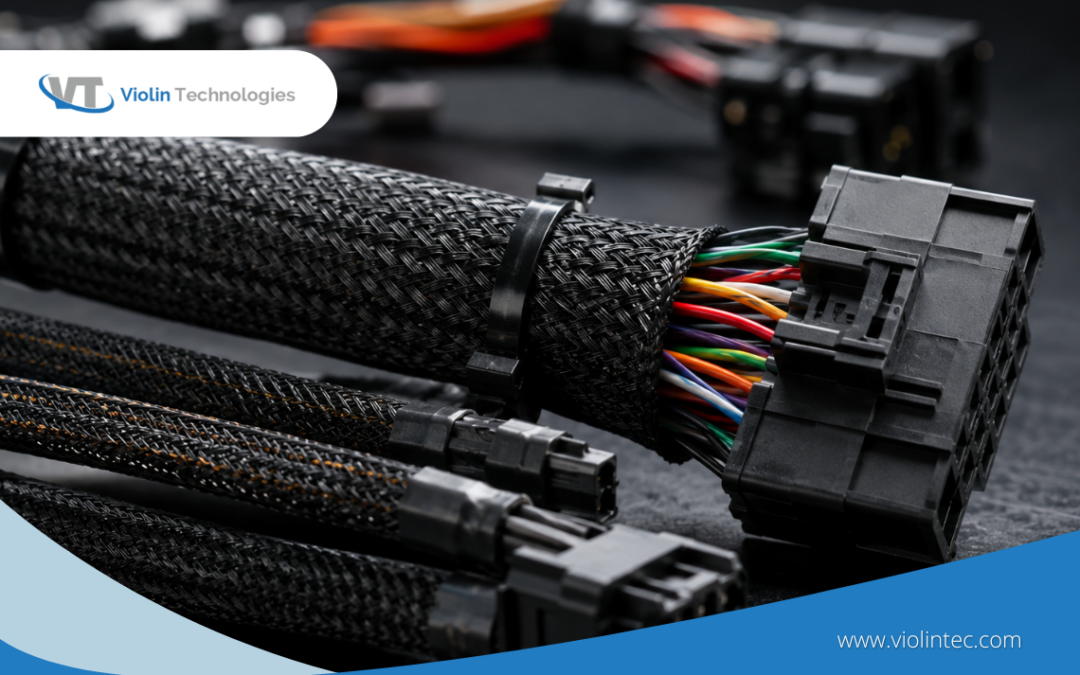
A braided wire harness is a bundle of wires wrapped in an interlocking sleeve produced by a looming machine. The machine passes strands of material, typically polyester, nylon, fiberglass, or metal, over and under each other in a diagonal pattern, creating a tight, flexible sheath around the cable bundle.
The interlocking structure distributes mechanical stress across many strands rather than concentrating it at a single point. When the harness bends, twists, or rubs against a surface, the load spreads evenly. That is why braided harnesses consistently outlast alternatives like convoluted tubing in demanding environments.
“Braided sleeving does not just protect cables. It actively extends the service life of the entire harness by managing heat, abrasion, and moisture simultaneously.”
What Are the Key Benefits of Braided Wire Harnesses?
Engineers who switch to braided harnesses rarely go back. Here is why the performance difference is so pronounced.
Open-weave construction allows heat to escape rather than build up, reducing the risk of insulation breakdown and electrical fires.
Tight braiding blocks abrasive particles from reaching wire insulation, eliminating the wear-and-tear that plagues convoluted tubing.
Extra cushioning built into the weave absorbs shock and vibration, preventing insulation fatigue in high-cycle environments.
Multiple wires are consolidated into a single, neat bundle. No tape, no cable ties. Tracer strands can differentiate circuits at a glance.
Braided sleeves expand to fit irregular or oversized cable bundles without creating gaps or pressure points in the sheath.
Water can pass through the open weave rather than pooling inside, which is critical in freezing conditions where trapped moisture causes cracking.
Custom cable manufacturers in USA specializes in braided harnesses and demonstrates material testing results prior to application experience in the industry and provides samples before production commits.
What Materials Are Used in Braided Wire Harness Sleeving?
Material selection is where a good specification becomes a great one. Each material offers a distinct performance profile, and matching that profile to the operating environment is what separates a harness that lasts from one that fails early.
| Material | Family | Key Strengths | Limitations | Best Applications |
|---|---|---|---|---|
| Nylon | Polymer | Lightweight, flexible, moisture-resistant, easy to route and install | Limited UV and high-temperature resistance; weaker chemical resistance vs. alternatives | Automotive wiring, consumer electronics, general routing where flexibility is the priority |
| Polyester & PET | Polymer | Expands up to 3x resting diameter; strong abrasion, corrosion, and fluid resistance; strain relief | Can be unstable under extreme hot or cold temperature swings | Automotive fluid environments, oversized or irregular cable bundles, general industrial use |
| PPS Monofilament | Polymer | Chemically inert to acids, fuels, bases, and steam; inherently flame-resistant; lightweight | Lower flexibility; limited corrosion and UV resistance | Aerospace, telecom, and high-temperature industrial applications requiring chemical stability |
| Fiberglass & Nomex | Composite | Withstands up to 2000°F; resistant to radiation, acids, solvents, and moisture | Less flexible than polymer sleeves; not impervious to UV light | Engine compartments, furnace wiring, aerospace, and applications adjacent to extreme heat sources |
| Metal Braiding | Unmatched cut and abrasion resistance; RFI, EMI, and ESD shielding; antimicrobial options available | Heavier than polymer alternatives; higher cost; can be less flexible depending on strand gauge | Outdoor, aerospace, high-vibration automotive, signal-sensitive electronics, grounding solutions |
The best quality contract manufacturing partners in the USA walks you through sleeve selection based on your specific operating environment rather than defaulting to a single material for every project
Polyester
PET
PPS Monofilament
Fiberglass / Nomex
Stainless Steel
How Does Wire Harness Braiding Directly Improve Harness Lifespan?
The lifespan improvement from braided sleeving comes down to three compounding mechanisms working together.
First, the breathable weave keeps operating temperatures lower. Wire insulation degrades faster at elevated temperatures. By allowing heat to dissipate rather than accumulate, braided sleeves directly extend how long insulation maintains its dielectric and mechanical properties.
Second, the tight weave structure prevents external abrasives, whether they are road grit in an automotive application, mineral dust in a mining environment, or metal shavings on a production floor, from contacting the wire insulation at all. This eliminates the primary failure mode of most standard cable loom.
Third, the braided structure provides cushioning that absorbs shock and vibration rather than transmitting them to the wire itself. In applications with continuous vibration, this is often the difference between a harness that lasts three years and one that lasts a decade or more.
Does Braided Metal Sleeving Provide EMI and RFI Protection?
Yes, and this is a significant reason metal braided sleeving is specified in sensitive electronic environments. Metal braid, typically stainless steel, tinned copper, or aluminum, acts as a Faraday cage around the cable bundle, preventing electromagnetic interference from entering the harness and preventing signal noise from radiating outward.
In applications where signal integrity is critical, such as aerospace avionics, industrial robotics controllers, or medical instrumentation, metal-braided shielding is often the only sleeving option that meets electrical performance requirements. Beyond shielding, metal sleeves also offer the highest cut resistance of any sleeve material, making them suitable for applications where physical security of the wiring is also a concern.
Final Thought: Braiding Is an Investment, Not a Line Item
Wire harness braiding is one of those specification decisions that appear to be a cost at the front end but reveal their value over time. Harnesses that run longer without failure, handle harsher conditions without degradation, and organize cleanly without additional cable management hardware consistently deliver lower total cost over a product’s service life.
Whether you are sourcing from the best wire harness manufacturers in India for high-volume production, working with the best wire harness manufacturers in USA for domestic compliance, or partnering with custom cable manufacturers in USA for specialized designs, the question is the same: is your current sleeving specification actually matched to your operating environment? If you are not certain, it is worth asking the question before the next harness failure asks it for you.
Ready to Specify Braided Wire Harnesses?
Work with experienced contract manufacturing partners who understand material selection, braid construction, and application-specific performance requirements.