
IP testing verifies how well a medical device enclosure protects internal components against solid particles and liquids. For manufacturers engaged in contract manufacturing of medical devices, IP testing is not just a regulatory checkbox; it is a key quality and risk-management activity that directly affects product reliability and patient outcomes.
This blog explains what IP testing is, how IP ratings work, why they are essential for medical devices, and how manufacturers can integrate IP testing into compliant production workflows under ISO 13485.
What Is Ingress Protection (IP) Testing?
Ingress Protection testing evaluates a device’s enclosure ability to prevent intrusion by external elements such as dust, tools, fingers, water, and other liquids. The results of this testing are expressed as an IP rating, defined by the IEC 60529 standard.
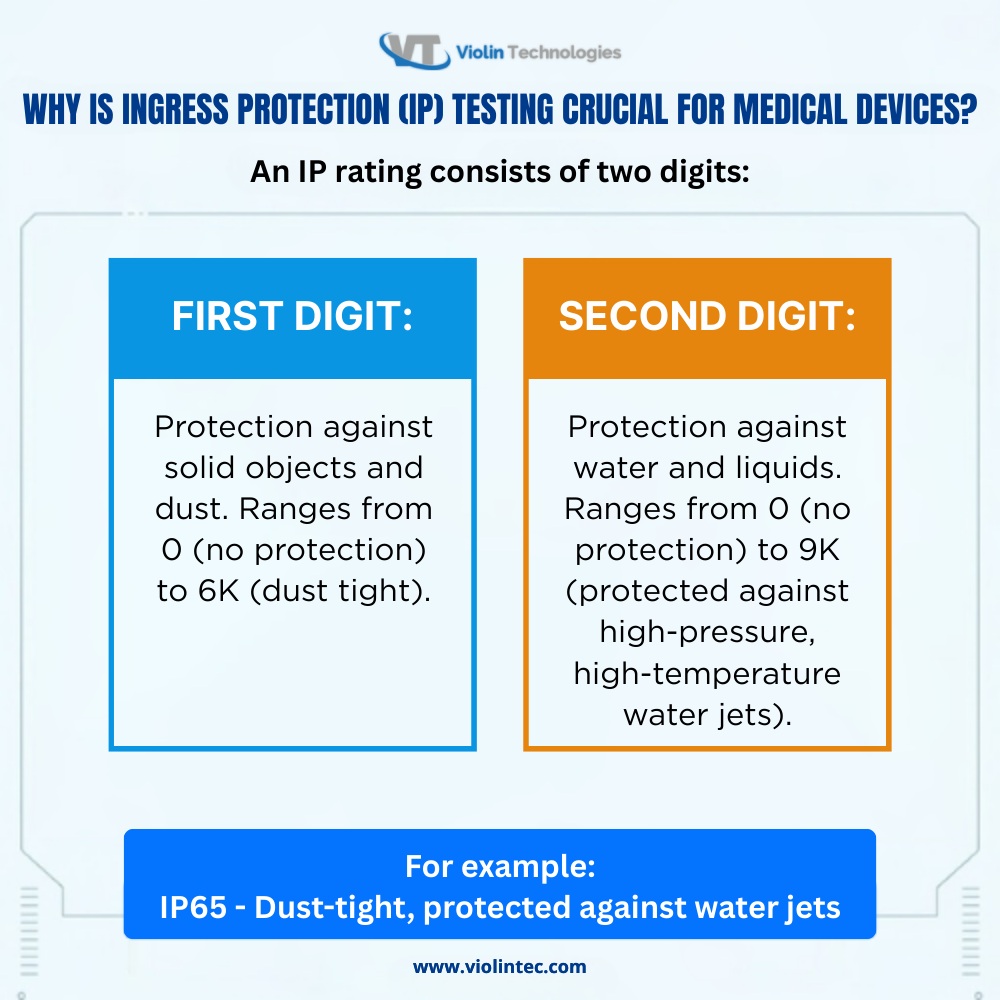
An IP rating consists of two digits:
- First digit: Protection against solid objects and dust. Ranges from 0 (no protection) to 6K (dust tight).
- Second digit: Protection against water and liquids. Ranges from 0 (no protection) to 9K (protected against high-pressure, high-temperature water jets).
For example:
- IP54: Limited dust ingress, protection against water splashes
- IP65: Dust-tight, protected against water jets
- IP67: Dust-tight, protected against temporary immersion in water
IP testing simulates real-world exposure conditions to confirm that the device enclosure performs as designed.
Why IP Testing Is Especially Important for Medical Devices
1. Patient Safety and Device Reliability
Medical devices often operate in close contact with patients, bodily fluids, and cleaning agents. If moisture or contaminants penetrate the enclosure, they can cause:
- Electrical shorts
- Corrosion of internal components
- Sensor drift or malfunction
- Inaccurate readings or unexpected shutdowns
In life-support or diagnostic equipment, such failures can lead to serious patient harm. IP testing helps ensure that the enclosure provides adequate protection throughout the device’s intended use.
2. Compliance With Regulatory Requirements
Medical device regulators expect manufacturers to demonstrate that devices are safe under normal and foreseeable conditions of use. While IP ratings themselves may not always be explicitly mandated, proof of environmental protection is often required as part of risk management and verification testing.
An ISO 13485 Certified company must show that design inputs, verification activities, and validation results support product safety. IP testing data is frequently used to support:
- Electrical shorts
- Design verification reports
- Risk management files (ISO 14971)
- Technical documentation for regulatory submissions
For an ISO 13485 Certified Contract Manufacturing Company, consistent IP testing is essential to meet both customer and regulatory expectations.
3. Protection During Cleaning and Disinfection
Medical devices are routinely cleaned and disinfected using liquids, sprays, or wipes. These processes can expose devices to repeated moisture ingress risks.
Without appropriate IP protection:
- Cleaning fluids may seep into enclosures.
- Seals may degrade over time.
- Internal electronics may fail prematurely.
IP testing verifies that seals, gaskets, and enclosure designs can withstand repeated exposure to liquids without compromising performance.
4. Traceability and Risk Management
Medical devices are often expected to function reliably for many years. Environmental exposure over time like humidity, dust, accidental spills can degrade performance if ingress protection is inadequate.
By validating enclosure performance through IP testing, manufacturers reduce:
- Field failures
- Service calls and warranty claims
- Product recalls and reputational damage.
How IP Ratings Are Determined
Solid Particle Testing (First Digit)
This portion of IP testing evaluates protection against solid objects, including dust. Tests may involve:
- Probes of specific sizes to simulate fingers or tools.
- Dust chambers to assess fine particulate ingress
For medical devices used in clinical or home environments, dust protection is critical to prevent sensor contamination and mechanical wear.
Liquid Ingress Testing (Second Digit)
Liquid testing depends on the required IP rating and may include:
- Drip tests (vertical or angled)
- Spray and jet testing
- Immersion tests for portable or wearable devices
The device is inspected after testing to confirm no harmful ingress has occurred, and that functionality remains intact.
Design Considerations That Affect IP Performance
Enclosure Design and Sealing
IP performance depends heavily on mechanical design. Key factors include:
- Seal geometry and material selection
- Gasket compression and consistency
- Fastener placement and torque control
Precision manufacturing processes, such as medical device CNC machining, play a critical role in achieving the tight tolerances needed for effective sealing.
Material Selection
Different enclosure materials respond differently to moisture, chemicals, and temperature changes. Plastics, metals, and elastomers must be chosen based on:
- Environmental exposure
- Cleaning agents
- Long-term durability
Material compatibility is often evaluated during IP testing to ensure seals and enclosures do not degrade prematurely.
Assembly and Process Control
Even a well-designed enclosure can fail IP testing if assembly processes are inconsistent. Common issues include:
- Improper gasket installation
- Contaminants trapped in sealing surfaces
- Uneven fastener tightening
An ISO 13485 Certified company ensures that assembly processes are documented, validated, and monitored to maintain consistent IP performance.
Challenges in IP Testing for Medical Devices
Balancing Protection and Usability
Higher IP ratings often require tighter seals, which may increase assembly complexity, affect device cooling, and make maintenance more difficult.
Manufacturers must balance environmental protection with usability, serviceability, and cost.
Testing After Design Changes
Even small designs or material changes can affect IP performance. Changes to enclosure thickness, fasteners, and coatings or finishes may require re-testing to ensure the IP rating remains valid.
Conclusion
Ingress Protection (IP) testing is a critical component in ensuring the safety, reliability, and regulatory compliance of medical devices. By validating resistance to dust and liquids, IP testing protects sensitive electronics, supports long-term performance, and reduces risk to patients and users.
For manufacturers and partners involved in contract manufacturing for medical devices, IP testing is not optional; it is an essential part of quality assurance. Precision processes such as medical device CNC machining, combined with strong quality systems in an ISO 13485 Certified Contract Manufacturing Company, ensure that enclosure designs consistently meet their intended IP ratings.
In an industry where failure is not acceptable, IP testing provides the confidence that medical devices will perform safely in real-world environments, every day.