
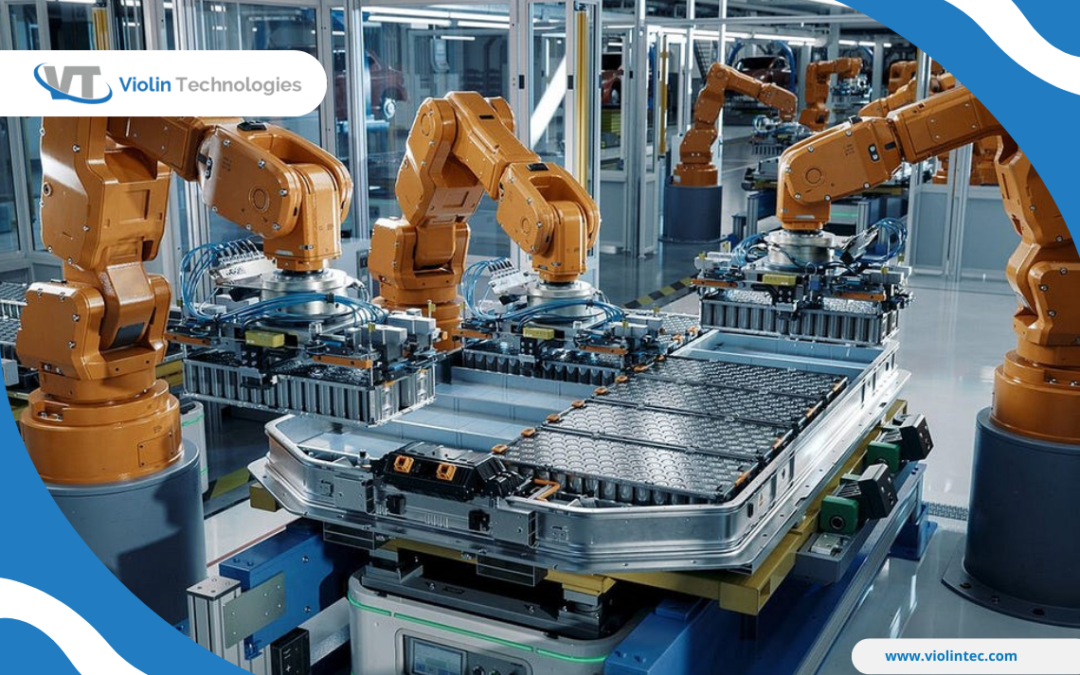
What Is New Product Introduction (NPI)?
New Product Introduction (NPI) is the structured process of transforming a product concept into a manufacturable, market-ready product through design, prototyping, validation, testing, and production scaling.
What Exactly Is New Product Introduction in Manufacturing?
At its core, New Product Introduction (NPI) process in manufacturing is the end-to-end process that takes a product idea through concept, design, prototyping, validation, and ultimately, full-scale production. It is not simply about designing something new. It is about proving the product works, confirming it can be manufactured consistently, and setting up the supply chain to deliver it on time.
Many engineers use NPI and NPD (New Product Development) interchangeably, but there is a meaningful distinction. NPD focuses on research and design. NPI picks up the baton from there, covering manufacturing readiness, supplier qualification, regulatory compliance, and market launch. In the electronics and hardware industries, especially, choosing the right contract electronics manufacturing partner at the NPI stage can be the single biggest factor separating a smooth launch from a costly, delayed one.
Why NPI Matters More Than Most Companies Realize
Missing a product launch window by even a few weeks can hand market share directly to competitors. Beyond speed, NPI forces early answers to hard questions: Can this design actually be manufactured at scale? Are the materials and components reliably sourced? Does the product meet regulatory standards in every target market?
Reduced Risk
Problems caught in prototyping cost a fraction of what they cost after tooling is locked.
Faster Time-to-Market
A structured process removes guesswork and keeps every team moving on the same timeline.
Supply Chain Alignment
Suppliers are qualified early, so there are no material surprises during the production ramp.
Stronger Profitability
Design for Manufacturing principles implemented early help maintain competitive long-term unit costs.
Compliance Confidence
Regulatory certifications are pursued in parallel, not as a last-minute scramble.
Cross-Team Alignment
Engineering, procurement, and marketing work from the same roadmap and share the same milestones.
What Are the Steps in the New Product Introduction (NPI) Process?
The steps in the New Product Introduction (NPI) process in manufacturing vary slightly by industry, but the core sequence remains consistent across hardware, electronics, and consumer goods manufacturing. Here is how it typically unfolds.
Concept & Feasibility
The process starts with a problem worth solving. Market research, customer pain points, and competitive gaps drive the initial product concept. A feasibility analysis covering technical, financial, and regulatory factors determines whether the idea is worth pursuing.
Product Design & DFM
Engineering teams translate the concept into detailed CAD models. Design for Manufacturability (DFM) reviews happen here such as catching geometry issues, material choices, and tolerance stack-ups that would inflate cost or cause defects down the line. This is where working with experienced new product introduction (NPI) services pays early dividends.
Prototyping & Development
Physical prototypes bring the design off the screen. Technologies such as CNC machining and 3D printing are used to quickly build functional models. Engineers can test fit, form, and function in the real world, find problems that simulation misses, and refine the design before expensive tooling is cut.
Testing & Validation (EVT → DVT → PVT)
This is the most rigorous phase. Engineering Validation Testing (EVT) checks basic functionality. Design Validation Testing (DVT) assesses the design’s durability, reliability, and compliance. Production Validation Testing (PVT) runs a limited production batch to confirm that the manufacturing process, tooling, and supply chain all hold up under real conditions.
Pilot Production Ramp
A controlled production run, larger than a prototype batch but smaller than full volume, validates the entire manufacturing workflow. Assembly lines are tuned, supplier performance is measured, and any remaining process bottlenecks are addressed before the volume gates open.
Market Launch & Continuous Improvement
The product ships to distributors. Early customer feedback is monitored closely to improve future production cycles. Return rates, field failure reports, and adoption data all feed back into the production team, so the next run is better, cheaper, and faster to build than the first.
What Is the Role of a Contract Manufacturing Partner in NPI?
One of the most consequential decisions during any NPI program is choosing who actually builds the product. The right contract electronics manufacturing partner does far more than quote a price per unit. They review designs for manufacturability, flag supply chain risks before they cause production delays, manage the transition from prototype to pilot to mass production, and carry institutional knowledge across dozens of similar programs.
How Does NPI Differ Between Electronics and General Manufacturing?
In general manufacturing, NPI often centers on tooling and material selection. In electronics, complexity multiplies dramatically. PCB assembly design, firmware, electromagnetic compatibility (EMC) testing, component sourcing risk, and regulatory certifications all stack on top of the standard manufacturing-readiness work.
| NPI Stage | General Manufacturing Focus | Electronics Manufacturing Focus |
|---|---|---|
| Design | CAD, DFM, material selection | Schematic, PCB layout, firmware architecture |
| Prototyping | CNC, 3D printing | PCB spins, enclosure prototypes, firmware builds |
| Validation | Functional & stress testing | EMC/EMI, safety certifications, firmware testing |
| Pilot Run | Assembly line validation | SMT line setup, ICT & functional test fixture build |
| Supply Chain | Material availability | Component lead times, EOL risk, approved vendor lists |
What Are the Most Common NPI Failures and How to Avoid Them?
Most NPI failures trace back to one of a handful of root causes. Recognizing them early is the best defense.
Skipping DFM reviews: Teams rush from concept to prototype without a proper manufacturability check. The result is a beautiful prototype that cannot be produced consistently at volume without costly redesigns.
Late supplier engagement: Waiting until PVT to properly qualify suppliers means that any supplier issues, quality problems, capacity constraints, or long-lead component issues occur during the most expensive phase of the program.
Underestimating compliance: Regulatory certifications are not a rubber stamp. In some categories, testing and approval can take months. Starting late means missing the launch window, sometimes by an entire product cycle.
Poor cross-functional alignment: Engineering finishes a design that marketing cannot position, or that procurement cannot source affordably. Building shared milestones and review gates across departments prevents this entirely.
How Do You Choose the Right NPI Services Provider?
Dedicated new product introduction (NPI) services from an experienced manufacturer can compress timelines significantly and prevent expensive mid-program course corrections. When evaluating providers, the key questions are practical ones: Have they run programs in your industry vertical? Can they prototype in-house, or will they outsource that stage? What does their engineering review process actually look like in practice?
Look for partners who treat DFM feedback as a service, not a barrier. The best ones will tell you that your design has a problem before they build it, not after. They bring process knowledge, tooling expertise, and supplier relationships that an in-house team building its first product simply cannot replicate.
Ready to Launch Your Next Product?
Working with an experienced manufacturing partner from the early design stage is one of the best investments an NPI program can make. The right partner spots problems early, keeps costs predictable, and gets you to market faster.
Need help accelerating your product launch? Connect with Violin Technology’s NPI and electronics manufacturing specialists to reduce production risks and bring your product to market faster.