
Many OEMs assume that their EMS partner automatically follows the right standards. However, unless expectations are clearly defined, misunderstandings can occur. Poor solder joints, incorrect inspection criteria, or inconsistent workmanship can lead to costly field failures.
This blog explains the most important IPC standards in PCB assembly, why they matter to EMS customers, and how you can use them to protect your product and business.
What Are IPC Standards?
IPC is a global trade association that develops widely accepted standards for electronics manufacturing. These standards define the acceptability of materials, processes, and finished assemblies.
In simple terms, IPC standards create a common language between OEMs and EMS providers. They clarify what “good” looks like in PCB fabrication and assembly.
If you are evaluating the top 10 EMS companies or comparing regional suppliers, their adherence to IPC standards should be one of your first checkpoints.
Why EMS Customers Must Understand IPC Standards
Many customers focus only on cost and lead time. While those factors matter, field-quality failures are far more expensive.
Understanding IPC standards for PCB assembly helps you:
- Define workmanship expectations clearly
- Avoid quality disputes
- Ensure product reliability
- Reduce rework and warranty returns
- Improve long-term supplier performance
When expectations are documented in engineering drawings and contracts, there is less ambiguity during inspections and audits.
Key IPC Standards Every EMS Customer Should Know
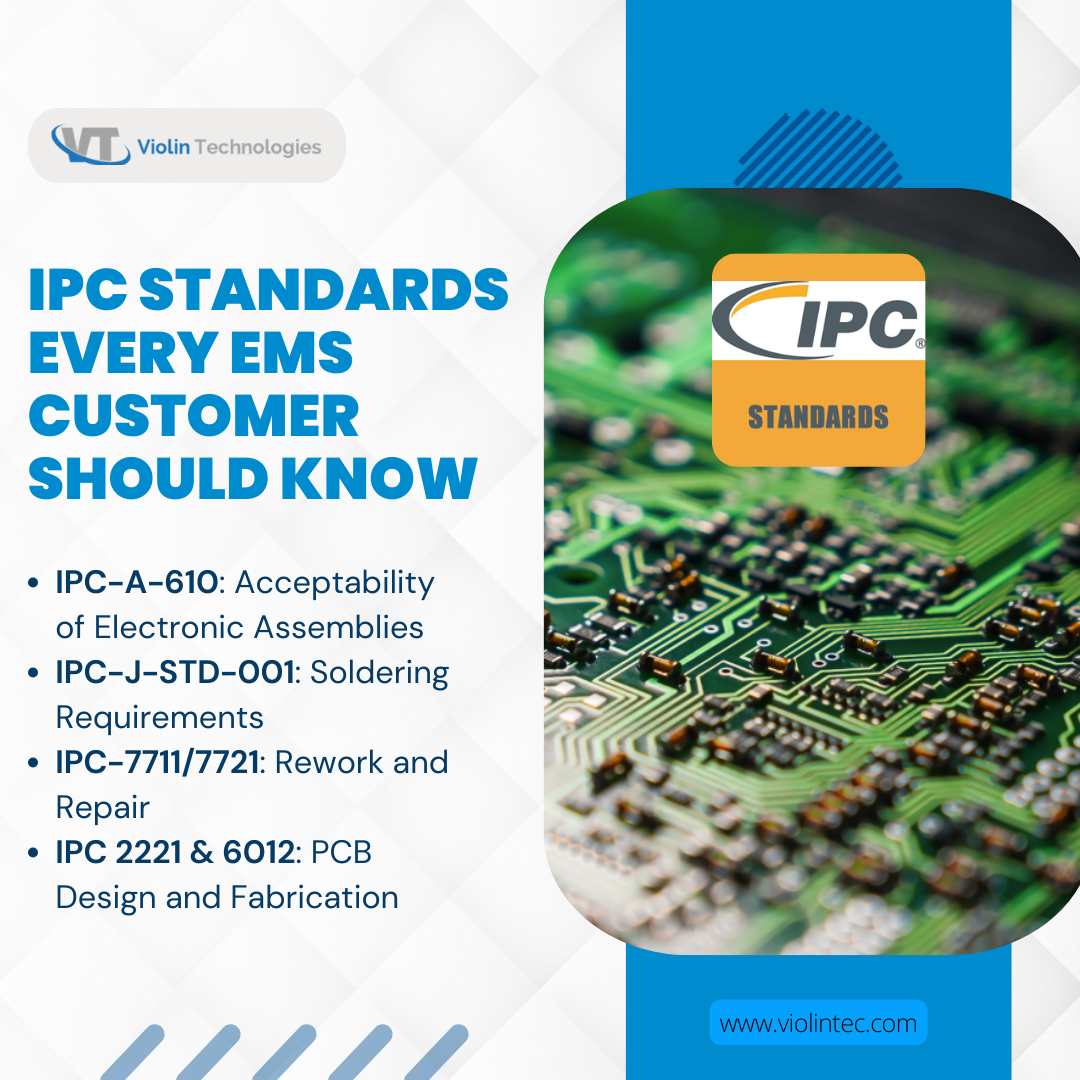
1. IPC A 610: Acceptability of Electronic Assemblies
IPC-A-610 is one of the most important standards in PCB assembly. It defines the visual criteria for acceptable solder joints, component placement, cleanliness, and workmanship.
This standard classifies products into three categories:
Class 1: General electronic products
Class 2: Dedicated service electronics
Class 3: High reliability electronics
If you manufacture automotive, aerospace, medical, or industrial control systems, you likely require Class 3 compliance. Many disputes between OEMs and EMS providers arise simply because the product class was never clearly defined.
Always specify the required IPC class in your documentation.
2. IPC J STD 001: Soldering Requirements
While IPC-A-610 focuses on inspection criteria, IPC-J-STD-001 addresses the process requirements for soldering. It defines material control, process control, rework, and operator qualifications.
If your EMS provider claims compliance, verify that their technicians are IPC-certified. Certification ensures that operators are trained to meet defined workmanship standards.
3. IPC 7711/7721: Rework and Repair
No production process is perfect. Boards sometimes require rework or repair. IPC 7711/7721 defines acceptable rework practices to maintain reliability.
As an EMS customer, you should ask your provider how they handle rework and whether they follow IPC guidelines. Poor rework practices can weaken solder joints and shorten product life.
4. IPC 2221 and 6012: PCB Design and Fabrication
Although these standards primarily relate to PCB fabrication rather than assembly, they still affect your final product. IPC 2221 covers generic PCB design requirements, while IPC 6012 defines performance specifications for rigid boards.
If you are evaluating the benefits of outsourcing PCB manufacturing, working with a provider who understands these design and fabrication standards reduces risk early in the product lifecycle.
The Business Impact of IPC Compliance
1. Improved Reliability
Consistent adherence to IPC standards leads to predictable solder quality, correct component placement, and stronger mechanical integrity. This reduces early life failures and improves product reliability.
2. Lower Long-Term Costs
Some OEMs choose the lowest-bid supplier without verifying process compliance. The result often includes rework, delayed shipments, and customer complaints.
Choosing an EMS provider that strictly follows IPC standards may not be the cheapest option upfront, but it reduces hidden quality costs.
This is one of the key benefits of outsourcing PCB manufacturing to a professional, standards-driven EMS partner rather than managing assembly internally without strong quality systems.
3. Easier Audits and Certifications
If your company operates in regulated industries, audits are part of life. EMS providers who comply with IPC standards usually maintain structured documentation, training records, and inspection procedures. That makes regulatory audits smoother
How to Ensure Your EMS Partner Meets IPC Requirements
If you are wondering how to find a reliable EMS provider, IPC compliance should be central to your evaluation process.
Here are practical steps you can take:
Ask for Certification Records
Verify operator certifications and confirm whether inspectors are trained to IPC A-610 and J-STD-001.
Review Their Quality Manual
A strong EMS provider will clearly reference IPC standards in their quality procedures.
Conduct a Process Audit
If possible, visit the facility. Observe soldering processes, inspection stations, and ESD control. Compare what you see against IPC guidelines.
Define Requirements in Writing
Clearly state the required IPC class in your drawings and contracts. Do not assume the supplier will default to Class 3.
Common Mistakes EMS Customers Make
- Not specifying IPC class requirements.
- Focusing only on cost per board
- Ignoring operator certification
- Skipping supplier audits
- Failing to review rework procedures
Avoiding these mistakes protects your product in the field.
Final Thoughts
IPC standards for PCB assembly are more than technical documents. They are safeguards that protect your brand, customers, and long-term profitability. As an EMS customer, understanding these standards empowers you to ask the right questions, define clear expectations, and select the right manufacturing partner. Whether you are evaluating the benefits of outsourcing PCB manufacturing or learning how to find a reliable EMS provider, IPC compliance should remain a non-negotiable requirement. In a competitive market where reliability defines reputation, partnering with an EMS provider that respects IPC standards is not just a quality decision; it is a strategic one.