
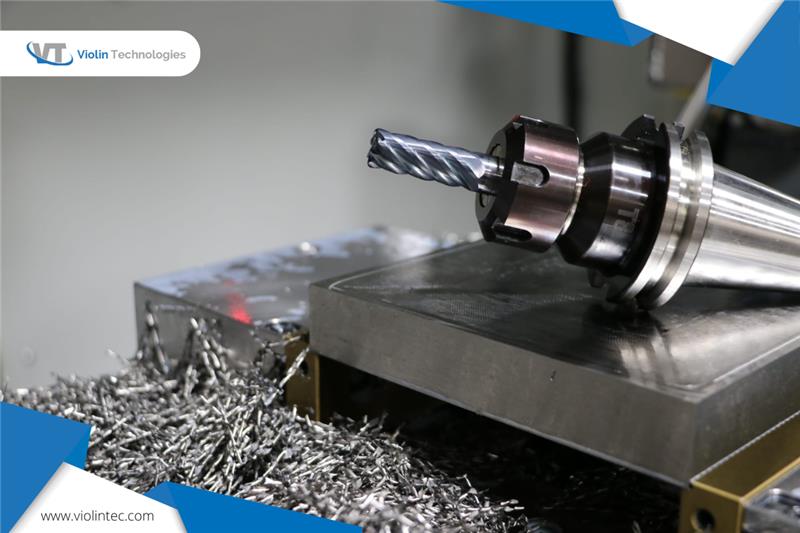
This guide explores the techniques, tips, and challenges involved in CNC machining titanium, helping you understand what it takes to get it right.
Why Titanium Is Difficult to Machine
Titanium offers several advantages, but these same properties create machining challenges.
First, titanium has low thermal conductivity. This means heat generated during cutting does not dissipate quickly. Instead, it stays concentrated at the cutting edge, leading to rapid tool wear.
Second, titanium has a strong tendency to work harden. When exposed to cutting forces, the material becomes harder, making subsequent passes more difficult.
Third, it has a high strength-to-weight ratio. While this is beneficial for end use, it increases cutting resistance and puts more stress on tools and machines.
These factors make titanium machining a specialized process that requires proper planning and execution.
Key Techniques for Machining Titanium
1. Use the Right Cutting Tools
Tool selection is critical when working with titanium. Carbide tools are commonly used because they can withstand high temperatures and maintain cutting-edge integrity.
Coated tools such as TiAlN or AlTiN help reduce friction and improve tool life. Sharp cutting edges are essential to prevent rubbing, which can increase heat and accelerate wear.
A skilled CNC precision machining partner will always select tools based on the specific titanium grade and part geometry.
2. Optimize Cutting Speeds and Feeds
Titanium requires lower cutting speeds compared to materials like aluminum or steel. High speeds generate excessive heat, which quickly damages tools.
At the same time, feed rates should be maintained at a consistent level. A slow feed can cause rubbing instead of cutting, leading to work hardening.
Balancing speed and feed are essential. Experienced Contract CNC manufacturers use optimized parameters to ensure efficient material removal without compromising tool life.
3. Maintain Proper Cooling
Cooling plays a vital role in titanium machining. Since heat builds quickly, high-pressure coolant systems help reduce temperatures at the cutting zone.
Flood coolant or through-tool coolant delivery is often preferred. This not only cools the tool but also helps remove chips effectively.
Without proper cooling, tool failure and surface damage can occur rapidly.
4. Ensure Rigidity and Stability
Titanium machining requires a rigid setup. Any vibration or deflection can lead to poor surface finish and tool breakage.
Using high-quality fixtures, stable tool holders, and well-maintained CNC machines ensures better control during cutting.
This is especially important for a low-volume CNC parts manufacturer, where each component must meet precise tolerances without the benefit of large-batch optimization.
5. Use Climb Milling
Climb milling is generally recommended for titanium machining. In this method, the cutter engages the material at maximum thickness and exits at zero thickness.
This reduces heat generation and minimizes tool wear compared to conventional milling.

Common Challenges in Titanium CNC Machining
Tool Wear and Breakage
One of the biggest challenges is rapid tool wear. The combination of heat, strength, and work hardening leads to frequent tool replacement if not managed properly.
Using high-quality tools and optimizing cutting parameters can help reduce this issue.
Heat Management
As mentioned earlier, titanium retains heat near the cutting area. This not only affects tool life but can also alter material properties.
Proper cooling strategies and controlled cutting speeds are essential for effective heat management.
Chip Control
Titanium produces long, stringy chips that can wrap around tools and components. This can damage the workpiece and interrupt machining operations.
Using chip breakers and proper tool geometry helps improve chip control and maintain process efficiency.
Surface Finish Issues
Achieving a smooth surface finish can be challenging due to vibration, tool wear, and heat buildup.
Fine-tuning cutting parameters and ensuring machine stability are key to achieving the desired finish.
Tips for Successful Titanium Machining
Plan the Process Carefully
Before starting machining, it is important to plan tool paths, cutting strategies, and material removal sequences. This reduces errors and improves efficiency.
Monitor Tool Condition
Regularly checking tool wear helps prevent sudden failures. Replacing tools at the right time ensures consistent quality.
Use Advanced CNC Machines
Modern CNC machines with high torque spindles and advanced control systems are better suited for titanium machining.
If your in-house capabilities are limited, it is often more efficient to hire a CNC machining company that specializes in difficult materials.
Work with Experienced Partners
Titanium machining is not ideal for trial-and-error. Working with a reliable CNC precision machining partner ensures that best practices are followed from the beginning.
Companies offering Contract CNC manufacturing services often have the expertise and infrastructure required to handle complex titanium components.
Final Thoughts
Machining titanium with a CNC machine is both challenging and rewarding. Its exceptional properties make it a preferred material for high-performance applications, but they also require specialized techniques and expertise.
From selecting the right tools to managing heat and optimizing cutting parameters, every step plays a critical role in achieving success. Whether you are producing aerospace components or medical parts, working with a trusted CNC precision machining partner or hiring a CNC machining company with proven experience can help you overcome challenges and deliver high-quality results.
With the right approach, titanium machining can move from being a challenge to a competitive advantage.