

In this blog, we’ll explore why quality standards matter so deeply in aerospace, how certifications elevate manufacturing practices, and why organizations strive to meet and exceed them.
What Are Aerospace Quality Standards?
At their core, aerospace quality standards are structured by guidelines and frameworks that define how products must be designed, manufactured, tested, and controlled throughout the supply chain. Unlike general industry practices, aerospace standards reflect extreme safety expectations due to the high-stakes environments in which the products will operate.
The two most prominent standards underpinning aerospace quality systems are:
AS9100 – The Aerospace Management Standard
Derived from the globally recognized ISO 9001 foundation, the AS9100 standard incorporates general quality principles and adds aerospace-specific requirements. These additional elements address the unique complexities of aerospace parts, requiring enhanced controls over processes, risk mitigation, traceability, configuration management, and the prevention of counterfeit parts.
AS9100 is widely adopted by aerospace OEMs, suppliers, and manufacturing organizations worldwide. It isn’t optional for many programs; rather, it is often a contractual requirement because it demonstrates that a company can consistently deliver products that meet stringent aerospace quality and safety expectations.
ISO 9001:2015 – The Foundation of Quality Management
ISO 9001 is a general quality management standard applicable across industries. It emphasizes customer satisfaction, a risk-based approach, continual improvement, documented processes, and evidence-based decision making.
While ISO 9001 does not specifically address aerospace requirements, it provides the foundational quality framework upon which AS9100 is built, creating a structured system for consistently managing processes and ensuring customer expectations are met.
Why Aerospace Quality Standards Matter
1. Safety Comes First
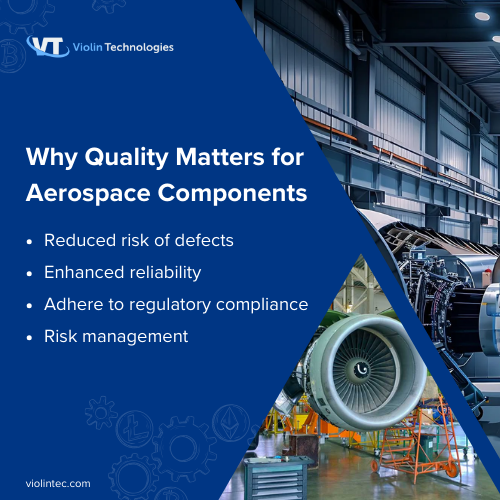
Aerospace systems operate in environments where failure can result in catastrophic consequences, including loss of life. Adherence to rigorous quality standards ensures that each component, no matter how small, performs exactly as intended under extreme conditions. Certification promotes consistency and reliability, reducing the risk of defects.
2. Enhanced Reliability and Performance
Components manufactured under recognized standards undergo systematic checks at every stage from raw materials to final inspection, ensuring they meet defined performance criteria. For an Aerospace CNC machining company, this means precision machining and thorough testing are not afterthoughts, but integral parts of the process.
This reliability is especially crucial for parts subjected to stress, vibration, temperature extremes, and long service life. Without a strict quality system, even minute variations can lead to accelerated wear or premature failure.
3. Regulatory Compliance and Market Access
Aerospace products must comply with international regulations set by aviation authorities such as the FAA (Federal Aviation Administration) and the EASA (European Union Aviation Safety Agency). Quality standards and certification frameworks help aircraft manufacturers and suppliers demonstrate compliance with these regulatory requirements, paving the way for global market access.
4. Traceability and Risk Management
AS9100 places special emphasis on traceability and control of processes that cannot be fully verified after the fact (so-called “special processes”). This includes traceability of materials, components, and finished products back to their origins, enabling rapid identification and mitigation of issues if and when they arise.
By establishing rigorous documentation and inspection processes, aerospace manufacturers can quickly identify root causes of problems and implement corrective actions, reducing downtime and potential recall costs.
5. Competitive Advantage for Suppliers
Being certified to recognized quality standards is a mark of credibility and trust. Aerospace OEMs typically require certification before considering a supplier for complex programs. Organizations that adhere to these standards position themselves among the Best Quality Contract Manufacturing Partners in the USA, making them more lucrative business partners for both national and international contracts.
How Quality Standards Improve CNC Manufacturing
For companies engaged in precision machining, especially those producing parts for aerospace systems, the integration of quality standards has practical benefits:
Precision Meets Quality Control
Standards like AS9100 and ISO 9001 require detailed documentation of machining processes, from setup and calibration to inspection. This ensures that parts are manufactured within strict tolerances and performance specifications; an essential factor for aerospace components. Having documented procedures also supports continuous improvement, reducing process variation over time.
Strong Supplier Relationships
In aerospace, components are rarely produced in isolation. Manufacturers rely on suppliers for raw materials, sub-assemblies, inspection services, and more. Quality standards encourage transparent supplier evaluations and qualification processes, supporting a more resilient and agile supply chain.
Operational Efficiency and Waste Reduction
The systematic approach mandated by standards highlights process weaknesses and inefficiencies. By identifying these early, organizations can implement changes that reduce waste, minimize defects, and improve overall productivity—a win-win for both quality and cost management.
Choosing a Quality-Focused Manufacturing Partner
If you are evaluating suppliers or partners for aerospace components, quality certifications should be a top criterion. Certified partners demonstrate a commitment to quality that goes beyond internal claims; they have been independently audited and validated against internationally recognized standards.
Working with an ISO 9001-certified CNC machine shop or one aligned with aerospace quality expectations ensures you get precision parts built under rigorous quality controls. These partners are more responsive to the compliance, documentation, and traceability requirements inherent in aerospace contracts.
When sourcing components, consider quality credentials alongside capabilities, communication, and delivery performance. Contract CNC manufacturing partners who embrace aerospace standards tend to prioritize customer support, proactive risk management, and continuous improvement; traits you want in a long-term manufacturing relationship.
Conclusion
In aerospace, standards are not bureaucratic hurdles; they are essential tools that safeguard human lives, preserve brand reputation, and strengthen industry trust. Certifications such as AS9100 and ISO 9001 form the backbone of quality management systems that deliver safety, reliability, operational excellence, and competitive advantage.
Whether you are working with a specialized Aerospace CNC machining company, evaluating Contract CNC manufacturing partners, or aiming to align your operations with the gold standard for quality, embracing aerospace standards and certifications is business critical.
The result? Products that perform reliably under the most demanding conditions, customers who trust your brand, and partners who value your commitment to quality. Quality standards don’t just protect products—they protect people, reputation, and the future of aviation and space exploration.